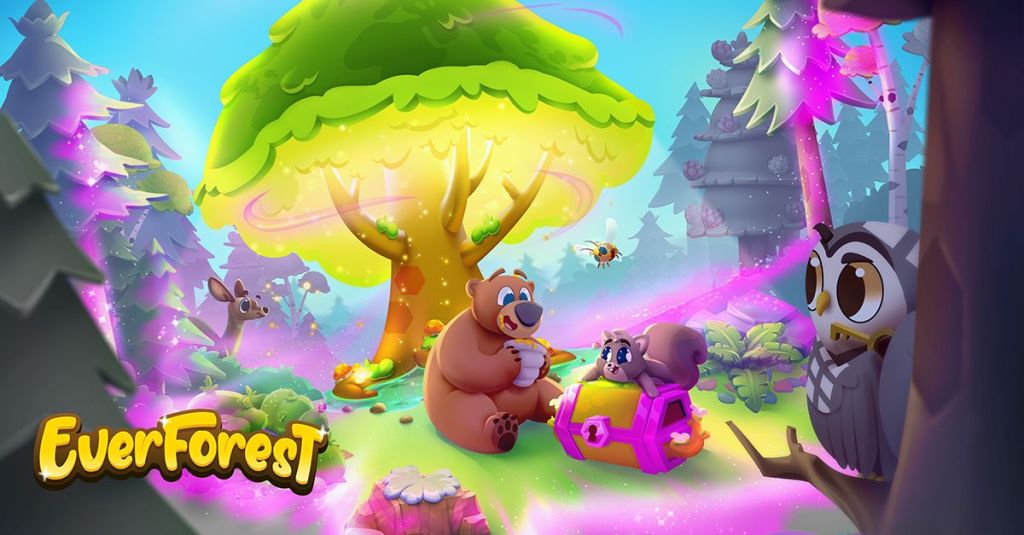
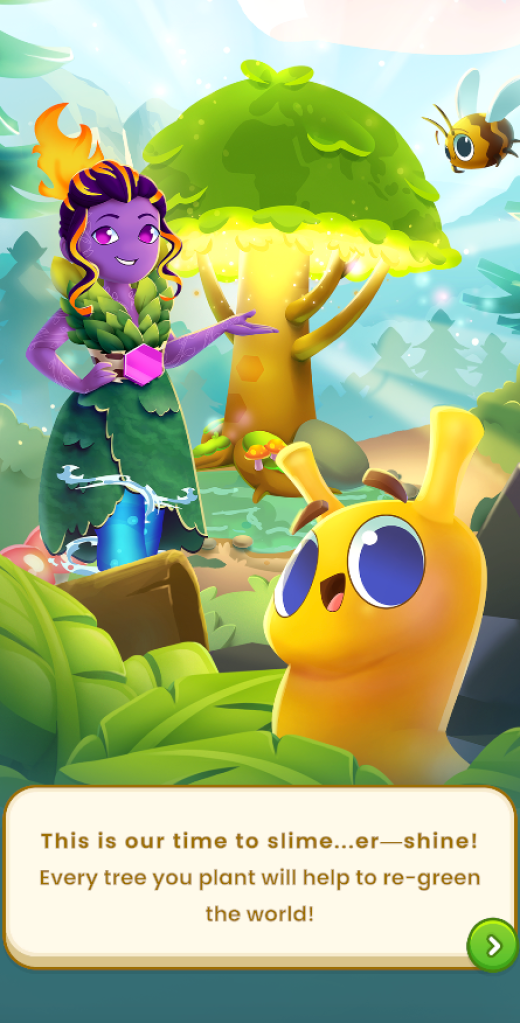
EverForest is a merge game where players can plant real trees just from playing! Help regrow a magical forest in order to meet friendly animals and discover powerful plants. Merge objects from the ecosystem in order to bring life back to the forest. Level up your friendships with Animals to unlock new stories and create more items.

Studio: Carbon Counts
Role: Senior Game Designer
Software: Unity
Time on Project: April 2023-November 2025
Team Size: ~15, Design Team of 2
Target Platform: iOS, Android
Global Launch: September 2024
Game Details
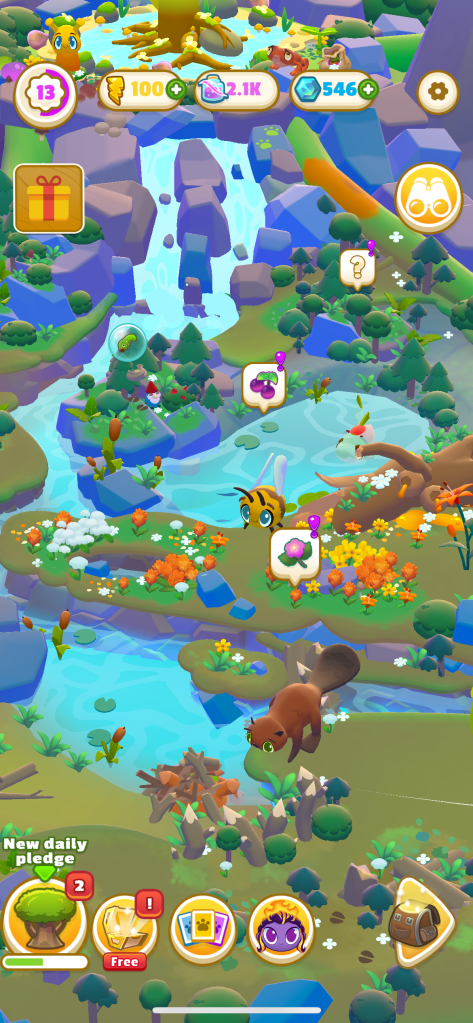
EverForest is a unique game in many regards. In its core mission, the game’s Play-To-Plant system allows anyone to help plant real trees while having fun. In its gameplay, EverForest combines merge gameplay with character collection to create a relaxing and satisfying experience. Animals give you items, merge the items to make them stronger, and use them to regrow the forest. As the player explores and restores, a variety of animal friends will move in and offer their help. Players can build their relationship with animals to spend time with them, learn more about them, and get more items to merge.
Players have a long-term goal of collecting animals and restoring the forest. They can also participate in limited-time events to get more trees, and work together with other players to plant hundreds of trees. Eventually, they will be able to customize their forest.
Contributions and Philosophy
- Redesigned core gameplay experience to increase D1 retention by 25%+
- Owned design and implementation of FTUE, progression, and retention systems
- Authored and balanced gameplay, narrative, and monetization data
- Managed and documented creative vision across all departments
- Shepherded 9 major releases across soft and global launches
- Created spreadsheet tools to increase productivity of generating content
- Searched for, tracked, and fixed bugs to ensure a polished experience
- Improved team communication and implemented stronger Scrum practices
When I joined the team at Carbon Counts, EverForest was not performing as well as expected. In my first weeks on the project, we decided to start from scratch. We reused the art and a majority of the codebase, but the gameplay experience was portrayed much differently to the player. We rapidly iterated in a small incubation team and analyzed the data from previous releases to figure out what the underlying issues were:
- Players were not feeling much progression at any level of play.
- Players were confused as to the purpose of Animals and why they might want to interact with them.
- The core act of harvesting and merging was confusing to players because of certain attempts at market differentiation
In short, we wanted to figure out a way to engage players more and get them interested in rebuilding the forest.
In service of giving the player clear short, mid, and long-term goals, we made the “golden path” of merging and turning in items more focused on rebuilding the map. This is in line with the “restoration” found in competitors like Merge Mansion, allowing players to get immediate visual feedback from their successes and clear guidance on where to go next. It also made the playable space feel more lived in, with the plants and animals eventually filling the forest with life and color. Separately, we needed to soften the slightly-mid-core mechanics of idle and gacha, so we gave players more delightful actions when merging and stripped much from the rest of the game so it became easier to understand/navigate. We also moved merge item generation to the merge board to bring ourselves in line with competitors, as the game’s previous systems were too difficult for casual players to grasp.
In addition, Animals were given more focus. Players would continue playing to unlock the Animals for both emotional (thinking the animal is cute, complete stories with them, and become their friends) and mechanical (giving more merge items more frequently) reasons. This gave us the ability to monetize casual and mid-core players, regardless of why they enjoyed the game. It also gave us a central focus to build all of our content around.
Aside from the gameplay changes I helped shepherd, the small size of the design team meant I ended up performing the duties of a producer/manager. I helped take entire systems from concept to completion. I communicated product vision with all departments and used documentation and prompt Slack/Jira replies to make sure everyone knew what to do and had answers to their questions, while still providing the team the freedom to experiment on their own. I saw miscommunication and failing pipelines, and decided to gather feedback and help management implement recommendations in order to improve our workflows. It’s important to me to have empathy for every member of the team and make sure they feel heard, and I attempted to impart these lessons upon team leadership.
 Tim Carbone